 Ultimate guide
What Makes a Pizza Crust Authentic: A Complete Guide
Last Updated: November 21, 2026
Quick Summary
Authentic pizza crust is a lean dough of flour, water, yeast, and salt, fermented long enough to develop flavor and structure, then baked at high heat until it puffs, blisters, and chars in spots. That definition holds across styles, even when the flour, hydration, and oven change, which is what makes a pizza crust authentic in any tradition.
- Neapolitan regulations cap the pizza at a maximum diameter of 35 cm with a distinctly raised edge.
- New York-style dough typically uses bread flour with hydration in the low-to-mid 60 percent range.
- Yeast activity roughly doubles for every 15 to 20 degrees Fahrenheit of warmth.
- A cold ferment of 24 to 72 hours is a common way to build more complex flavor.
- Preheat a stone or steel at maximum heat for at least 45 minutes before baking.
Table of Contents
- What Makes a Pizza Crust Authentic
- Authenticity Across Pizza Styles: Neapolitan, New York, and Thin Crust
- The Authentic Pizza Dough Recipe: Four Ingredients That Matter
- An Italian Pizza Dough Recipe and the Flour Choices Behind It
- Pizza Dough Fermentation: How Time Builds Flavor and Structure
- Shaping, Topping, and Baking for a Crispy Chewy Bubbly Pizza Crust
- Home Oven Adaptations Versus Traditional Wood-Fired Ovens
- Myths and Misleading Authenticity Claims
- Order a Crust Worth the Name
- Frequently Asked Questions
What Makes a Pizza Crust Authentic
Authentic pizza crust is a lean dough of flour, water, yeast, and salt, fermented long enough to develop flavor and structure, then baked at high heat until it puffs, blisters, and chars in spots. That definition holds across styles, even when the flour, hydration, and oven change. This guide breaks down what makes a pizza crust authentic, and how to judge it at the table or in your own kitchen.
Authenticity Across Pizza Styles: Neapolitan, New York, and Thin Crust
There is no single authentic crust, only authentic versions of different regional styles. Neapolitan dough is lean and soft, New York-style dough uses bread flour and develops gluten for a chewy, sturdy slice, and thin crust aims for cracker-like snap. Each style has its own rules, and each can be done well or faked badly. The useful question is not "which style is authentic" but "does this pie follow the conventions of the style it claims to be?"
Neapolitan Standards You Can Verify
The Associazione Verace Pizza Napoletana's international regulations describe a round pizza with a maximum diameter of 35 cm and a distinctly raised edge. Those are checkable features. A genuine Neapolitan pie arrives soft in the center, puffy at the rim, and spotted with char, not uniformly golden. Distinguish between a style done faithfully and a style carrying a formal certification, both can be honest, but they are not identical claims.
New York-Style Conventions
New York-style pizza has no single certifying body, but its conventions are consistent enough to judge. The dough typically uses bread flour with higher protein, a hydration in the low-to-mid 60 percent range, and a longer cold ferment that builds both flavor and the gluten strength needed to support a large, foldable slice. The crust is thin in the center, thicker at the rim, and baked on a stone or steel at high heat until the underside is crisp and the rim is browned rather than blistered black.
Thin-Crust Conventions
Thin-crust pizza, whether the cracker-style bar pie or the tavern-style round, prioritizes a crisp, rigid base over a chewy rim. That outcome comes from lower hydration, a shorter ferment, and often a light docking or rolling step that deliberately limits gas pockets. It is the one common style where rolling the dough is not a flaw, the goal is even thickness and snap, not an open crumb.
What the Styles Share
Across all three, the same fundamentals separate a genuine crust from a passable one: a lean dough of flour, water, yeast, and salt; real fermentation time; gentle handling that preserves gas; and enough heat to set the structure before the toppings weigh it down. The style determines the target; the technique determines whether you hit it. That is why a single "authentic recipe" claim is a weaker signal than a pie that visibly follows its own tradition's rules.
The Authentic Pizza Dough Recipe: Four Ingredients That Matter
An authentic pizza dough recipe contains four components, and each one changes the crust's outcome:
- Flour sets structure. Protein content determines how much gluten can form, which decides whether you get chew or snap.
- Water sets hydration. More water means a more open, airy crumb; less water means a denser, crisper base.
- Yeast drives fermentation. Instant yeast is reliable, but time and temperature do more for flavor than quantity does.
- Salt tightens gluten and controls yeast activity. Skip it and the dough turns slack and bland.
Olive oil and sugar appear in many recipes, but they are style choices, not requirements. Neapolitan dough typically leaves both out.
An Italian Pizza Dough Recipe and the Flour Choices Behind It
The flour debate is where most home bakers get stuck, and where a lot of advice overcomplicates things. Tipo 00 flour is finely milled and produces a tender, extensible dough that stretches without tearing.
A common mistake is assuming specialty flour is mandatory. It is not. You can read more about the flour behind our crust if you want the details.
Pizza Dough Fermentation: How Time Builds Flavor and Structure
Pizza dough fermentation is the single biggest lever on flavor, and it costs nothing but patience. During a slow rise, yeast produces carbon dioxide that inflates the dough, while enzymes break down starch and protein into sugars and amino acids. That process creates the nutty, slightly tangy depth that a fast rise never delivers. What most recipes leave out is how the three fermentation variables, time, temperature, and yeast quantity, trade off against each other, and what each one does to the crust you finally bake.
The Three Variables and How They Interact
Fermentation is a rate problem. Yeast activity roughly doubles for every 15 to 20 degrees Fahrenheit of warmth, so a dough that takes 24 hours in a 38-degree refrigerator may be ready in 2 to 3 hours at 75 degrees. You can shorten time by adding yeast or raising temperature, but the two are not interchangeable. More yeast speeds gas production without giving enzymes the same window to build flavor compounds, while a longer, cooler ferment lets both processes run in parallel.
What Happens at Each Stage
- Bulk fermentation (first rise): Yeast consumes sugars and releases carbon dioxide; gluten continues to hydrate and organize. The dough should look puffy and feel airy, roughly doubled in volume.
- Degassing and shaping: Punching down redistributes yeast and sugars, equalizes dough temperature, and relaxes gluten so the dough can be stretched without tearing.
- Final proof: The shaped dough re-inflates and builds the gas pockets that become the rim's open crumb. A short final proof at room temperature is common for Neapolitan-style dough, while cold-proofed balls are brought up to temperature before baking.
Reading the Dough Instead of the Clock
Recipe times are starting points, not guarantees. The dough is ready when it has roughly doubled, feels airy, and springs back slowly when pressed with a floured finger. If it snaps back fast, gluten is still tight and the dough needs more rest. If it collapses or smells sharply of alcohol, it has over-fermented and will bake flat and pale.
Fermentation and Digestibility
Long fermentation does more than flavor. The extended breakdown of starch and protein is why many people who find fast-risen pizza heavy report that a well-fermented crust sits lighter.
Watch out: a dough that has been cold-fermenting for days can over-proof within an hour once it warms up, so check it early and often rather than trusting the original timeline.
Shaping, Topping, and Baking for a Crispy Chewy Bubbly Pizza Crust
A crispy chewy bubbly pizza crust comes from three things: gentle handling, restrained toppings, and serious heat.
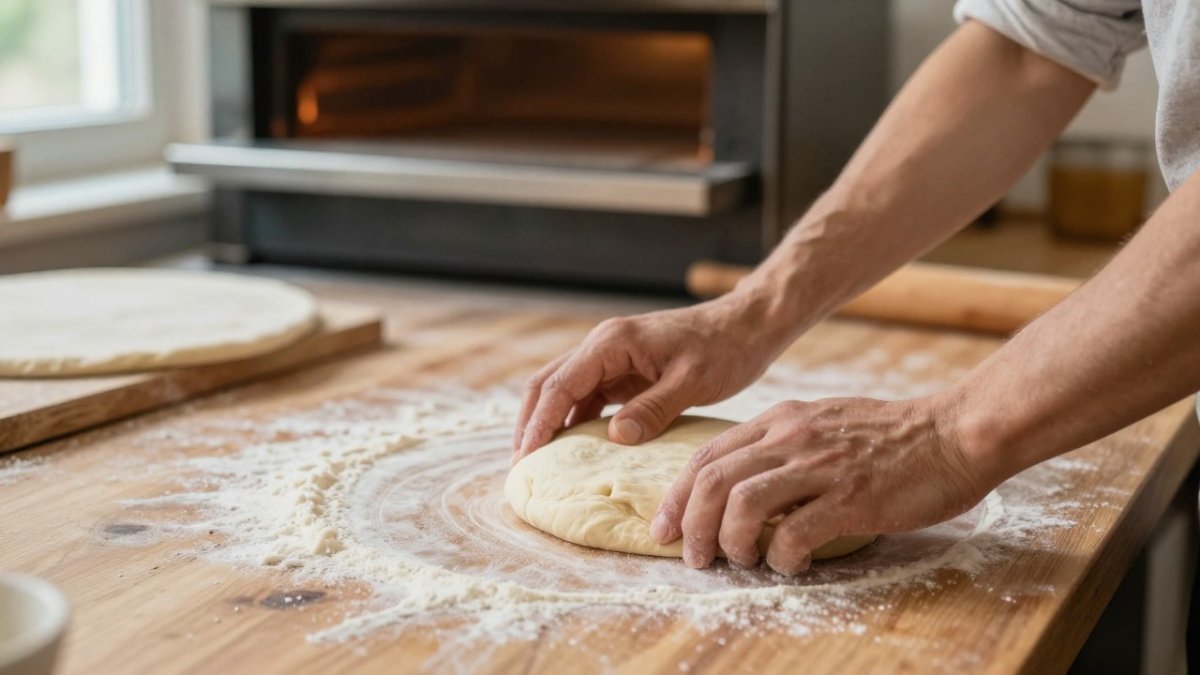
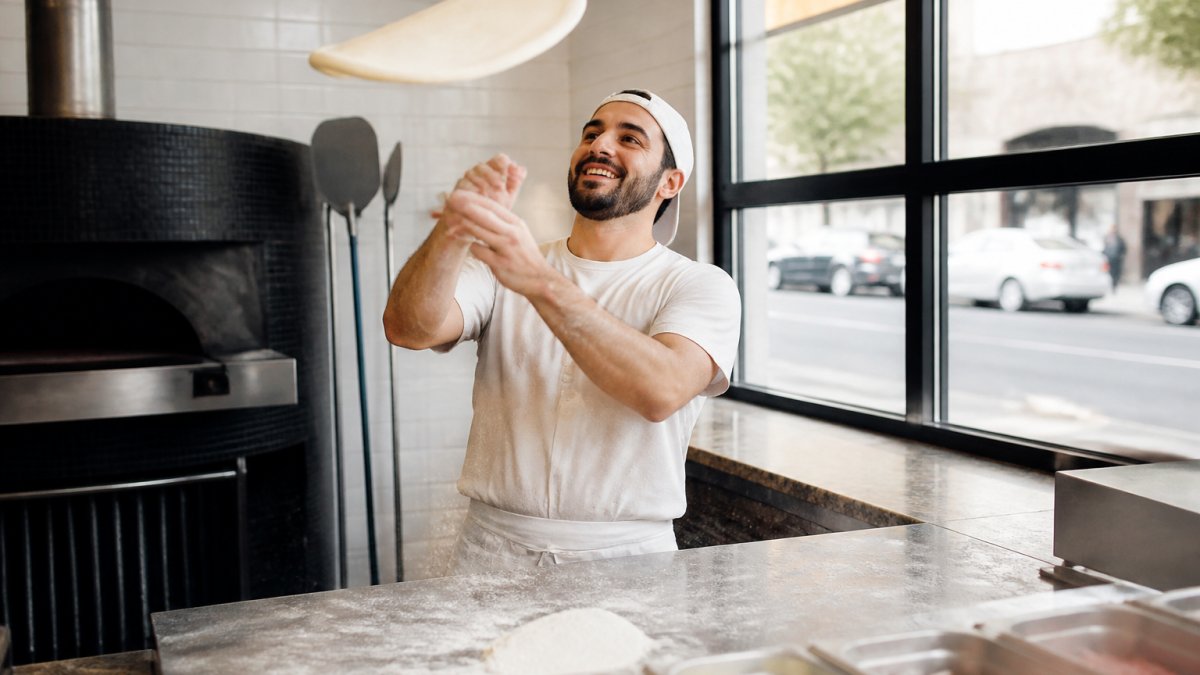
Never roll it flat with a pin, which crushes the gas pockets you spent hours building. For a closer look at why hand-tossing changes the texture, see what makes hand-tossed dough better, and if you are weighing the trade-offs, whether hand-tossed crusts are worth it is a fair question to ask.
Home Oven Adaptations Versus Traditional Wood-Fired Ovens
A wood-fired oven runs extremely hot and bakes a Neapolitan pie in roughly a minute, producing the leopard-spotting and puff that define the style. Home ovens cannot match that, and pretending otherwise leads to frustration.
The practical fix is a preheated pizza stone or steel placed high in the oven, set to its maximum temperature for at least 45 minutes.
| Oven Type | Typical Heat | Bake Time | Best For |
|---|---|---|---|
| Wood-fired | Very high | About 1 minute | Neapolitan char and puff |
| Home oven + steel | Maximum setting | 6-10 minutes | Crisp, blistered home pies |
| Home oven + stone | Maximum setting | 8-12 minutes | Even, reliable browning |
Bake Time
Myths and Misleading Authenticity Claims
Plenty of "authentic" labels do not survive scrutiny. A few claims worth questioning:
- "Only Tipo 00 flour is authentic." Fine flour helps Neapolitan style, but other flours make legitimate crusts in other styles.
- "Authentic means one recipe." Regional styles differ widely, and each has honest versions.
- "Char means it is burnt." Spotting and blistering are hallmarks of high-heat baking, not mistakes.
The better test is sensory: does the crust have a crisp bottom, a chewy interior, a raised, blistered edge, and real flavor from fermentation? If you want to find a genuinely hand-tossed pie nearby, this guide to authentic hand-tossed pizza near you walks through what to look for.
Order a Crust Worth the Name
Judging authenticity comes down to a short list: four honest ingredients, real fermentation time, gentle shaping, and enough heat to blister the rim. Get those right and the crust speaks for itself. Wana Pizza offers fresh hand-tossed dough, a signature sweet sauce, and a garlic butter crust. As Clare B. from Peoria put it, "The hand-tossed dough melts in your mouth, light, airy and crispy on the edges." If you want to see what is on offer, browse our full menu and order online for pickup or delivery.
Craving a crust that actually earns the word authentic? Wana Pizza makes fresh hand-tossed dough daily, tops it with our signature sweet sauce, and finishes it with a garlic butter crust for a hot, fresh pie every time. Get started with Wana Pizza and taste the difference real dough makes.
Frequently Asked Questions
How long should authentic pizza dough rise?
A same-day dough needs 2 to 4 hours at room temperature. For deeper flavor, let it ferment in the refrigerator for 24 to 72 hours, then bring it to room temperature for 1 to 2 hours before shaping. Longer fermentation develops more complex flavor and a more digestible crust. Watch for a doubled volume and a domed top as your cue that the dough is ready.
Which ingredients are used in authentic pizza dough?
Traditional dough uses just four ingredients: flour, water, yeast, and salt. Neapolitan-style dough skips olive oil and sugar, relying on flour quality and fermentation for flavor. Some home recipes add a small amount of olive oil for a more tender crust, but purists argue it changes the texture. Start with the four basics, then adjust only if your crust needs more elasticity or browning.
Does authentic pizza crust need to be cooked in a wood-fired oven?
A wood-fired oven reaches 800 to 900 degrees Fahrenheit and produces the leopard-spotted char associated with Neapolitan pizza. Home ovens max out around 500 to 550 degrees, so you will not get identical results. A pizza steel or stone preheated for 45 to 60 minutes, plus the broiler in the final minutes, gets you a blistered, crispy bottom that comes close. The crust can still be authentic in character even without a wood fire.
What texture should an authentic pizza crust have?
Expect a thin center with a raised, puffy edge. The bottom should be crispy enough to hold its shape, while the rim is chewy and airy with blistered bubbles. A dense, bready crumb throughout usually signals under-fermentation or too much flour during shaping. The crust should fold slightly without cracking, and the charred spots should taste toasted, not burnt.
What is the 55 rule for pizza?
The 55 rule refers to a dough hydration of 55 percent, meaning 55 grams of water for every 100 grams of flour. This produces a stiff, easy-to-handle dough that bakes into a crisp, cracker-like thin crust. It is a common starting point for home bakers nervous about sticky dough. Higher hydration, around 60 to 65 percent, gives a more open, chewy crumb but requires more practice to shape.
How do you get a crispy, chewy, bubbly crust at home?
Preheat a pizza stone or steel at your oven's highest setting for at least 45 minutes. Shape the dough with a thicker rim and a thin center, and avoid over-topping. Bake on the hot surface until the bottom is crisp, then switch to the broiler for 1 to 2 minutes to blister the top. Let the pizza rest on a rack for a minute before slicing so steam does not soften the crust.