 comparison
Are Hand-Tossed Pizza Crusts Worth It? What to Know
Last Updated: October 30, 2026
Quick Summary
A hand-tossed crust delivers a soft, chewy center with a browned, crisp rim because hand stretching keeps the gas pockets a machine press would flatten. That lighter structure supports a moderate layer of sauce and cheese without going soggy, giving you better crust-to-topping balance than pan or thin crust.
- Hand-tossed crust remains the dominant segment in the pizza crust market, per Fact.MR's analysis.
- Slow cold fermentation of 24 to 72 hours relaxes gluten so dough stretches without tearing.
- Keep toppings to a moderate sauce and cheese layer plus two to three moisture-heavy toppings.
- Re-crisp slices in a covered skillet over medium heat, then uncover for the last minute.
- Nearly one in five consumers skip eating pizza crust, according to Quartz's reporting.
Table of Contents
- What Is Hand-Tossed Pizza Crust?
- The Benefits of Hand-Tossed Crust, Explained
- Hand-Tossed vs. Pan Pizza: Which Crust Fits Your Order?
- Hand-Tossed vs. Thin-Crust Pizza: A Texture Comparison
- How Dough Handling and Ingredients Shape the Final Slice
- Toppings, Reheating, and How Crust Performance Changes
- Portion and Nutrition Considerations for Crust Lovers
- Ordering a Hand-Tossed Pie From Wana Pizza
- Frequently Asked Questions
What Is Hand-Tossed Pizza Crust?
Hand-tossed pizza crust is dough stretched by hand, usually spun in the air or pressed outward on a floured surface, instead of being rolled flat or pressed into a pan. The result is a round with uneven thickness: a slightly thicker rim, a thinner center, and a texture that bakes up soft and chewy inside with a browned, crisp exterior. According to Fact.MR's pizza crust market analysis, hand-tossed crust remains the dominant segment in the pizza crust market, which tells you most customers already vote for it with their wallets. The benefits of hand tossed pizza crust come down to how the dough is worked, not what is added to it. Below, we break down the texture, the topping math, and how it compares to pan and thin crust so you can order with confidence.
The Benefits of Hand-Tossed Crust, Explained
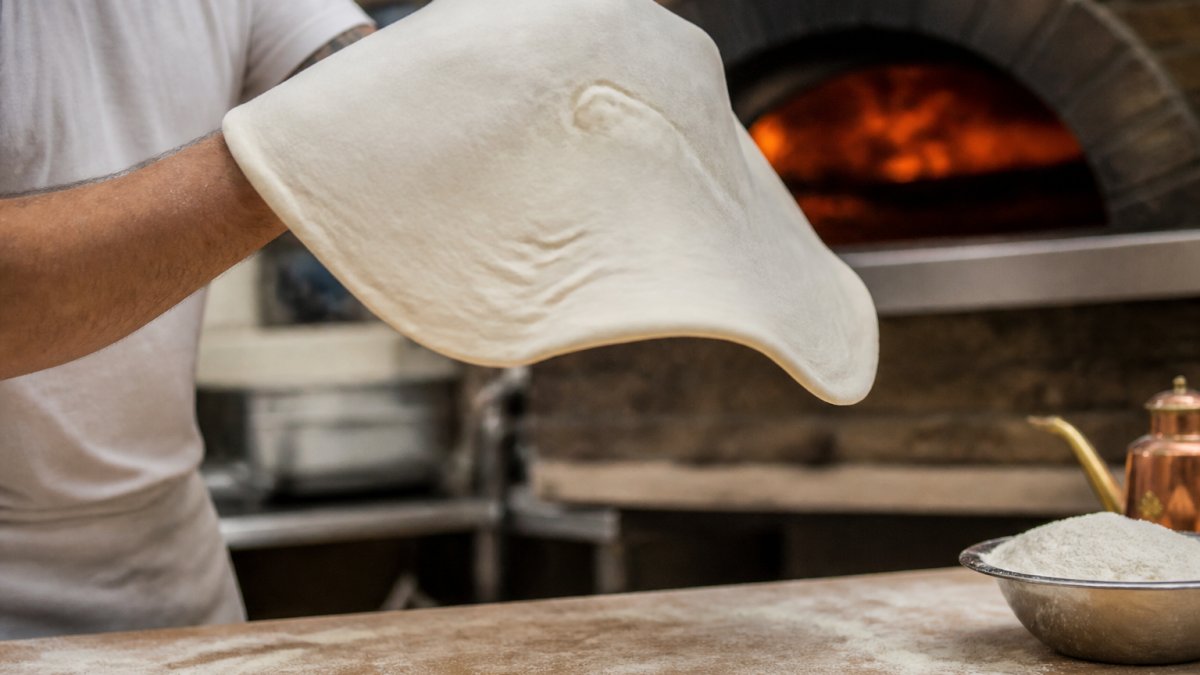
The main benefit is texture control. Hand stretching lets a pizzaiolo leave gas in the dough, so the rim puffs and browns while the center stays pliable. A machine press flattens those gas pockets and produces a uniform, denser bite. Hand-tossed dough also keeps a lighter structure, which means the crust supports toppings without turning soggy under them.
Texture You Can't Get From a Press
One Wana Pizza customer from Peoria, Illinois put it plainly: the hand-tossed dough "melts in your mouth --light, airy and crispy on the edges."
Better Crust-to-Topping Balance
Hand-tossed crust carries a moderate layer of sauce and cheese without collapsing. The dough-to-topping balance stays intact because the rim acts as a wall and the center is thin enough to bake through. That balance is the whole point of the style.
Hand-Tossed vs. Pan Pizza: Which Crust Fits Your Order?
Pan pizza is baked in an oiled pan, which fries the bottom and edges into a thick, crisp shell. Hand-tossed is stretched free-form and baked on a screen or stone. The difference shows up in thickness and crunch. Pan gives you a deep, buttery, focaccia-like base; hand-tossed gives you a lighter bite with a soft center and a chewy rim. Some customers prefer pan specifically for the crispy edges that hand-tossed dough does not produce, a point made by Holmes Cooking's crust comparison. If you want a heavier, richer slice, order pan. If you want balance and a lighter bite, hand-tossed wins.
Hand-Tossed vs. Thin-Crust Pizza: A Texture Comparison
Thin crust is rolled or pressed very flat and bakes into a cracker-like snap. Hand-tossed keeps more dough rise, so the crust texture is chewier and the slice folds instead of shattering. For pure crunch, thin crust is the better pick, as Bella Pizza's crust guide notes. For a soft center with a crisp edge, hand-tossed is the traditional choice. Neither is objectively better; they solve different cravings.
| Crust Style | Thickness | Texture | Best For |
|---|---|---|---|
| Hand-tossed | Medium, uneven | Chewy center, crisp rim | Balanced topping load |
| Pan | Thick | Fluffy, fried edges | Rich, heavy slices |
| Thin | Thin, even | Cracker crunch | Maximum crispiness |
How Dough Handling and Ingredients Shape the Final Slice
Hand-tossing gets the credit, but the final slice is really the product of three separate inputs: the dough formula, the fermentation schedule, and the stretching technique. Separating them matters because a hand-tossed pie made from a rushed, cold dough will not deliver the airy rim and chewy center that define the style, no matter how skilled the toss.
The dough formula. A lean pizza dough is typically flour, water, yeast, and salt, with oil or sugar optional. Flour protein content drives chew: bread flour with higher protein develops more gluten and gives a chewier bite, while all-purpose flour produces a more tender crust. Hydration, the ratio of water to flour, controls how open and airy the crumb can become. A wetter dough is harder to stretch but bakes up lighter. Oil adds tenderness and helps browning; sugar accelerates browning but can push the crust toward cookie-like if overused. None of these are hand-tossing benefits per se. They are formula decisions that hand-tossing simply reveals more clearly because the dough is not compressed by a press.
Fermentation. Time is the ingredient most shops cannot fake. A slow, cold fermentation (often 24 to 72 hours in the refrigerator) lets yeast produce flavor compounds and lets enzymes relax the gluten. A relaxed dough stretches without tearing and holds the gas that hand-tossing preserves. A same-day, warm ferment can still make good pizza, but the flavor is usually simpler and the dough is more elastic, which makes it fight back during stretching. This is why two shops using identical flour can produce very different hand-tossed crusts.
Stretching technique. Hand-tossing does two things a rolling pin cannot. First, it preserves the gas pockets built during fermentation, so the rim puffs in the oven. Second, it creates uneven thickness: a thicker rim, a thinner center, and a gradual transition between them. A rolling pin degasses the dough and produces a uniform sheet, which bakes into a denser, more cracker-like bite. A press does something similar with more force. The hand-tossed advantage is real, but it is a technique advantage layered on top of formula and fermentation, not a replacement for them.
What this means for your order. If you love a chewy, blistered rim, you are responding to a combination of higher-protein flour, adequate hydration, a slow ferment, and hand stretching. If you prefer a more tender, less chewy crust, a shop using all-purpose flour or a shorter ferment may suit you better even if the pizza is still hand-tossed. The label on the menu tells you the technique; the flavor and texture tell you the rest.
Toppings, Reheating, and How Crust Performance Changes
Hand-tossed crust is a middleweight: it can carry more than a thin crust but less than a deep pan. Understanding that limit is the difference between a balanced slice and a soggy center.
How much topping is too much. The thin center of a hand-tossed round bakes fast, but it also absorbs moisture fast. Wet toppings release water as they cook, and that water has nowhere to go on a flat screen or stone. The practical ceiling is roughly a moderate layer of sauce, a moderate layer of cheese, and two to three moisture-heavy toppings. Piling on fresh tomatoes, mushrooms, spinach, and extra sauce at once is the classic way to overwhelm the center.
Topping distribution. The rim is structural. It holds the slice and provides the chewy edge that hand-tossed fans want. Keep the center relatively sparse and let the outer third carry more weight. Cheese should reach the rim but not spill over it, because cheese that hangs over the edge burns before the center is done. If you are ordering a meat-heavy pie, expect the shop to compensate with a slightly thicker stretch or a shorter bake at higher heat; both are normal adjustments.
Why sogginess happens. Sogginess is a moisture-balance problem, not a crust-style problem. A hand-tossed crust that sits in a closed box for 20 minutes steams itself. A thin crust under the same conditions goes limp. A pan crust hides it better because the fried bottom stays crisp longer. The fix is the same across styles: vent the box, serve promptly, and avoid stacking pies.
Reheating that respects the crust. The goal is to re-crisp the surface without drying the interior. A skillet over medium heat with a lid for the first few minutes re-crisps the bottom and warms the toppings; removing the lid for the last minute restores the edge. A 400°F oven on a preheated stone or sheet pan works similarly. The microwave is the one method to avoid: it heats water inside the dough, which turns the chew rubbery and the rim soft. If you must use it, follow with a minute in a hot skillet.
Day-two performance.
Portion and Nutrition Considerations for Crust Lovers
Crust is the biggest variable in portion size. A thicker hand-tossed rim adds calories and carbs compared with thin crust, so portion awareness matters if you are watching intake. Nearly one in five consumers skip eating pizza crust, according to Quartz's reporting on pizza habits, which is a shame with a good hand-tossed pie. If dietary needs are a concern, check our Frequently Asked Questions for details on gluten-free crust and customization. Planning a group order? Use our party calculator to match guest count to the right amount of pizza.
Ordering a Hand-Tossed Pie From Wana Pizza
Here is where the theory meets dinner. Wana Pizza serves fresh, hand-tossed dough with flavorful ingredients, including our signature sweet sauce and garlic butter crust. Want the full lineup with prices? Browse our menu for specialty pizzas, build-your-own options, wings, calzones, and dessert. New to the area or coming back after years away? Our local guide to authentic hand-tossed pizza explains what makes the style worth seeking out. A Crestwood, Illinois customer summed it up: "Best pizza in the Chicago area."
The crust debate really comes down to what you want on the plate: a chewy, balanced slice or a thick, fried one. If it is the former, hand-tossed is the answer.
Frequently Asked Questions
What are the benefits of hand-tossed pizza crust?
Hand-tossed crust gives you a lighter bite with a soft, chewy center and a browned, crispier edge. Stretching the dough by hand preserves more of the gas built up during the rise, so the crust bakes up airy instead of dense. It also holds toppings in better balance than a thick pan base, since the crust-to-topping ratio stays even across the slice. Customers regularly mention the light, airy texture of hand-tossed dough.
Is hand-tossed pizza crust thinner than pan crust?
Yes. Pan pizza is baked in an oiled deep pan, which produces a thicker, fluffier base with a fried, crispy bottom. Hand-tossed crust is stretched to a moderate thickness, so it sits between pan and thin crust. You get chew and structure without the heaviness of a deep-dish slice. If you want crunch on the edges but a soft center, hand-tossed is the middle ground.
What makes hand-tossed pizza crust chewy?
Chew comes from gluten development in the dough and from how the dough is stretched. Hand stretching works the dough gently, keeping the gluten strands aligned without crushing the gas pockets built up during the rise. That combination gives a crust that springs back when you bite it. Baking at high heat sets the outside before the inside dries out, which is why a well-made hand-tossed crust stays soft in the middle and crisp at the edge.
Can I customize a hand-tossed crust for dietary needs?
Many shops offer crust and topping customization, but ask specifically about gluten sensitivity rather than assuming. A hand-tossed wheat crust is not gluten-free, and cross-contact in a shared kitchen is common. It is worth calling ahead to explain what you need. For a family with mixed preferences, ordering one plain cheese pie and one loaded pie on the same crust style usually keeps everyone happy.
Ready to taste the difference fresh dough makes? Wana Pizza delivers consistently hot, hand-tossed pies with our signature sweet sauce and garlic butter crust across Northwest Indiana. Order online today and get a pizza that arrives fresh, not lukewarm.