 ultimate-guide
What Makes Hand-Tossed Dough Better: A Guide
Table of Contents
- What Makes Hand-Tossed Dough Better
- Hand-Tossed vs. Pan Pizza: Key Differences
- Hand-Tossed vs. Thin Crust: Which Style Wins
- What Makes Pizza Dough Chewy
- Best Pizza Dough Techniques for Superior Results
- Why Hand Stretching Matters More Than Machines
- Achieving the Perfect Crust: Crispy Edges and Soft Center
- Frequently Asked Questions
Last Updated: October 21, 2026
What Makes Hand-Tossed Dough Better
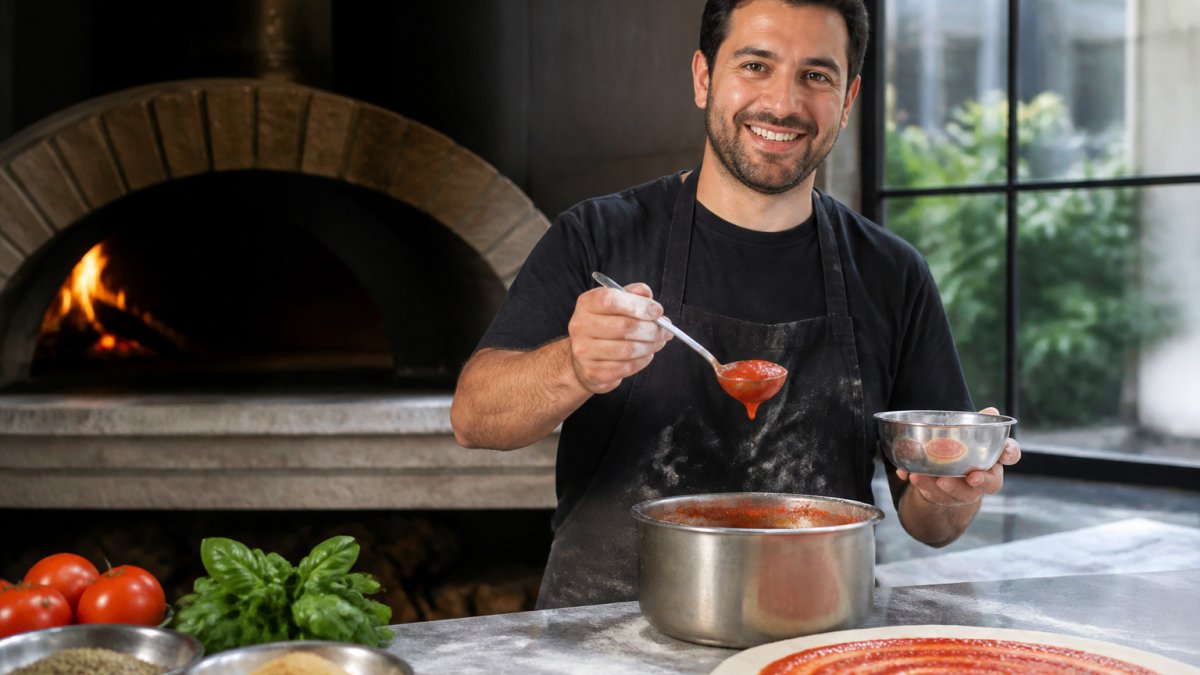
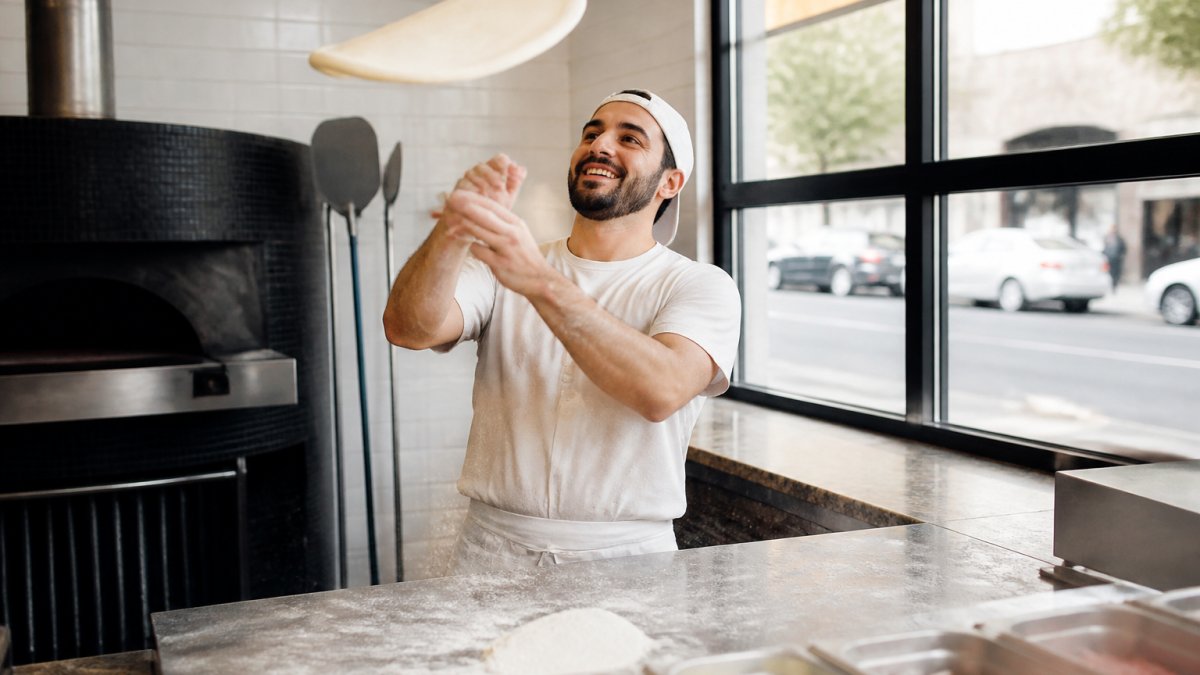
Hand-tossed dough delivers a superior pizza because stretching develops gluten structure while preserving the air pockets that create a lighter interior and crispier crust. Hand tossing controls fermentation byproducts, moisture, and elasticity in ways machines and pans cannot replicate. At Wana Pizza, hand-tossed dough isn't tradition, it's technique backed by how dough actually behaves.
Three factors separate hand-tossed dough from other methods. Hand stretching develops gluten without overworking it. Gas retention keeps fermentation bubbles intact instead of collapsing under machine pressure or pan weight. And hand tossing gives real-time tactile feedback: you feel when the dough is ready, stretching evenly, and at the right thickness, control that's impossible to automate.
Hand-Tossed vs. Pan Pizza: Key Differences
Pan pizza relies on oil pooling at the base and sides, creating a thick, crispy crust through direct heat transfer from the pan. Hand-tossed dough needs minimal oil because it cooks through direct oven heat and radiant warmth from the stone or oven floor. Pan dough uses less hydration and shorter fermentation because the pan provides structural support; hand-tossed dough needs higher hydration and longer fermentation because it must support itself.
Pan pizza produces a thick, uniform crust, crispy on the bottom and tender inside but consistent from edge to center. Hand-tossed pizza creates dramatic variation: thin and crispy at the cornicione, progressively thicker toward the center, and a soft, airy, almost bread-like interior, because hand stretching creates uneven thickness that the oven heat treats differently.
Fermentation timing diverges too. Pan pizza often ferments 12-18 hours cold to develop flavor without becoming too extensible. Hand-tossed dough typically ferments 24-72 hours, building the gluten relaxation and gas production behind that soft center, plus deeper flavor from organic acids and alcohols pan pizza doesn't have time to produce.
Hand-Tossed vs. Thin Crust: Which Style Wins
Thin crust prioritizes crispness and structural integrity over airiness. Lower hydration (typically 55-60%) and shorter fermentation create a denser dough that doesn't need hand stretching to hold its shape, so you can roll it flat or stretch it minimally. The result is a cracker-like crust that's crispy throughout.
Hand-tossed dough, conversely, uses higher hydration (typically 65-75%) and extended fermentation, producing a dough so extensible that it must be tossed and stretched constantly to prevent tearing. That high hydration and fermentation create gas pockets throughout the dough, which expand in the oven's heat, creating the signature light, airy interior. The thin crust wins on crispness; hand-tossed wins on texture complexity and flavor depth.
The practical difference matters for delivery. Thin crust stays crispy longer because it has fewer air pockets to collapse as it cools. Eating at the pizzeria or ordering pickup makes hand-tossed dough's superior texture and flavor worth the time constraint.
What Makes Pizza Dough Chewy
Chewiness comes from gluten development combined with moisture retention. Gluten is a protein network that forms when flour hydrates and is worked through mixing, kneading, or stretching; the more developed it is, the more elastic and chewy the crust. But gluten alone doesn't create chewiness, you also need the right water-to-flour ratio and fermentation conditions.
Gluten Development and Elasticity
Gluten develops through mechanical action and time. Mixing aligns gluten proteins into long chains; kneading and stretching organize them further. The real magic happens during fermentation, when enzymes break down and reorganize gluten strands in a process called gluten relaxation, which is why 48-hour dough stretches more easily than 4-hour dough.
Hand-tossed dough develops gluten through multiple rounds of stretching, each strengthening the network without overworking it. Machine mixing can develop gluten too quickly, leaving dough tight and hard to stretch. Hand stretching is gentler and more gradual, maintaining extensibility, the ability to stretch without tearing. A chewy crust needs strong gluten for elasticity plus high extensibility for a tender, yielding bite.
The flour type matters here. Bread flour contains 12-14% protein, creating stronger gluten networks than all-purpose flour (10-12% protein).
Hydration and Water-to-Flour Ratio
Water enables gluten development: without it, flour stays dry and gluten cannot form. More water means more hydration and a more extensible dough, but too much creates a sticky dough that's impossible to work with.
Ideal hydration for hand-tossed dough is typically 65-75%, or 65-75 grams of water per 100 grams of flour: wet enough to develop strong gluten and trap gas, dry enough to handle without excessive stickiness.
The relationship between hydration and chewiness is direct: higher hydration generally produces chewier, airier crust. But hydration interacts with fermentation time, oven temperature, and dough handling, so it's not the only variable.
Fermentation and Gas Retention
Fermentation is where chewy texture truly develops. Wild yeast and bacteria consume sugars and produce carbon dioxide and other byproducts; the CO2 creates gas pockets that expand in the oven, creating the open crumb structure, that light, airy interior with visible holes.
Fermentation also develops flavor through organic acids and alcohols. Longer fermentation (48-72 hours) produces more of these compounds, deepening flavor and chewiness as the dough develops more gluten relaxation.
Gas retention depends on gluten strength. A weak gluten network lets gas pockets burst during stretching or baking, producing a dense crust instead of an airy one. Hand-tossed dough needs gluten strong enough to contain the gas pockets without being so tight it prevents stretching. Achieving this precise balance of elasticity and structure remains the hallmark of authentic scratch-made food, a philosophy that defines the culinary landscape of Springfield.
Best Pizza Dough Techniques for Superior Results
Superior hand-tossed dough starts with the right formula and consistent technique. A basic formula uses water at 65-75% hydration, salt at 2-3% of flour weight, and yeast at 0.5-1% depending on fermentation time. But technique determines whether that formula produces great pizza or mediocre pizza.
Working from the Center Outward
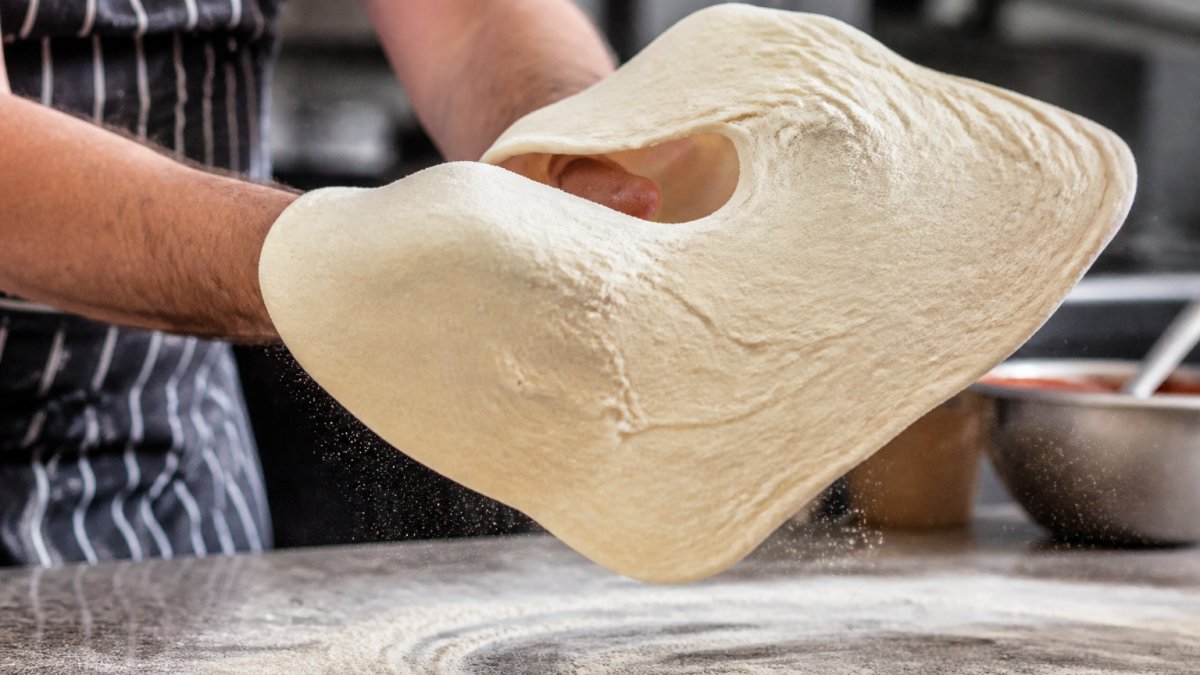
The classic hand-stretching technique starts with a dough ball on a floured surface: gently press the center with your fingertips and work outward, rotating as you go. This beats rolling because rolling crushes gas pockets while stretching preserves them.
The technique works because you expand the dough gradually, letting the gluten network stretch without tearing. Each outward press elongates gluten strands; each rotation stretches different sections evenly. The result is relatively uniform thickness, thinner at the edges where you started pressing and thicker at the center where you pressed last.
Common mistakes include pressing too hard (tearing gluten and releasing gas), working too fast (not giving gluten time to relax), and rotating too rarely (creating uneven thickness and weak spots). The best approach is slow, deliberate movements with one rotation per 3-4 outward presses.
Managing Dough Temperature and Handling
Dough temperature affects stretching behavior. Cold dough is tight and hard to stretch; warm dough is relaxed and easy to work with. The ideal stretching temperature is typically 65-75°F.
Handling technique matters too. Wet hands make dough stick to your fingers; too much flour creates dry spots that don't seal properly. Lightly flour your hands and work surface, just enough to prevent sticking without drying out the dough.
Learn to recognize when dough is ready to stretch. If it springs back immediately when pressed, it's not relaxed enough, so wait another 10-15 minutes. If the indentation stays, it's ready. Machines cannot provide this tactile feedback, which is why hand-tossed pizza requires actual skill.
Troubleshooting Common Stretching Problems
If dough tears during stretching, the usual cause is insufficient fermentation or gluten development. Cold dough tears more easily than warm, and underfermented dough tears because the gluten hasn't relaxed enough to extend without breaking.
If dough shrinks back after stretching, it's overproofing or the gluten is too tight. Overproofed dough has consumed most of its sugars and lost elasticity.
If dough is sticky and hard to handle, you likely have too much hydration for your skill level or environment.
Why Hand Stretching Matters More Than Machines
Machines can mix dough consistently and even shape rounds, but they cannot replicate the feedback of hand stretching. By hand, you feel resistance, sense where the gluten is strong or weak, and adjust in real time: pressing harder in thick spots, gentler in thin spots, rotating more if development feels uneven.
Machines apply uniform pressure, which sounds good but isn't: pizza dough benefits from variable pressure, with a slightly thicker center and thinner edges, to create its characteristic crust texture.
Hand stretching also builds in intentional variation. The cornicione benefits from slightly thicker dough, creating that characteristic chewy, bread-like edge. Machine stretching doesn't create this naturally; you have to program it in, adding complexity and cost.
The real advantage of hand stretching is quality control through human judgment. A skilled pizzaiolo can feel when dough is ready, stretched enough, or needs to rest.
Achieving the Perfect Crust: Crispy Edges and Soft Center
The ideal hand-tossed crust has crispy, charred edges and a soft, airy center, which requires three things: proper hydration, intentional thickness variation, and correct oven temperature.
Hydration is the foundation. At 65-75%, the dough has enough water to create steam during baking, keeping the center soft while the thinner, more exposed edges crisp and char. Lower hydration (thin crust style) produces crispness throughout and loses the soft center; higher hydration produces softness throughout, sometimes a gummy center.
Thickness variation is intentional during hand stretching: thinner at the edges, thicker at the center. The edges bake faster and crisp while the center stays softer longer for a tender, yielding bite. The difference is typically 1/8 inch at the edges to 1/4 inch at the center.
Oven temperature is the final variable. Hand-tossed pizza bakes at 550-650°F in a conventional oven. The exterior chars and crisps within 8-12 minutes (conventional), while the interior, insulated by the dough structure and center thickness, stays softer and steams gently.
According to research on pizza baking from food science institutions, proper internal temperature for fully cooked pizza is 165°F, which ensures food safety while maintaining the desired texture. The exterior should reach 200-220°F for proper crust development.
Together, hydration, thickness variation, and oven temperature create the signature hand-tossed experience: crispy, charred edges that shatter slightly when bitten, and a soft, airy, flavorful center.
At Wana Pizza, we've spent years perfecting this balance. When you order hand-tossed pizza from Wana Pizza, you're getting dough that's been stretched by hand, fermented for optimal flavor and texture, and baked to achieve that perfect combination of crispy edges and soft center. Food safety guidelines from the USDA confirm that properly handled and baked pizza is both delicious and safe.
Frequently Asked Questions
What makes hand-tossed dough better than other pizza styles?
Hand-tossed dough develops superior gluten structure through manual stretching, creating a chewy crust with crispy edges. The technique allows fermentation byproducts to create air bubbles that make the interior lighter and softer. Unlike pan pizza, which relies on oil and a rigid mold, hand-tossed dough's elasticity and extensibility produce that signature texture Clare B. describes: light, airy, and crispy on the edges.
How does hand-tossed pizza get its chewy texture?
Chewiness comes from gluten development combined with proper hydration. When you stretch dough by hand, you align gluten strands, creating elasticity and extensibility. A higher water-to-flour ratio allows gas retention during fermentation, producing air bubbles that give the crust its chewy, open crumb structure. Oven temperature also matters: baking at high heat sets the exterior quickly while the interior stays soft.
Is hand-tossed pizza thinner than pan pizza?
Hand-tossed pizza is typically thinner and lighter than pan pizza, but thicker than thin-crust varieties. The hand-tossed style avoids the heavy, oily base of pan pizza while still providing enough structure for toppings and that desirable chewy texture.
What's the secret to making hand-tossed dough at home?
Master three variables: hydration ratio, fermentation time, and dough temperature. When stretching, work from the center outward using gravity and gentle rotation rather than aggressive tossing. Proper flouring prevents sticking without toughening the dough. These techniques build dough strength and elasticity needed for that signature chewy crust.