 comparison
Is Sweet Sauce Pizza Worth Trying? A Honest Comparison
Last Updated: October 23, 2026
Quick Summary
Sweet sauce pizza is worth trying if you're open to flavor variations or find traditional pizza sauce too acidic. The style balances natural tomato sweetness with reduced acidity, creating a smoother finish that pairs well with savory toppings like pepperoni and sausage.
- Sweet sauce pizza uses added sugar, honey, or caramelized tomatoes to reduce acidity and create a smoother flavor than traditional sauce.
- Pepperoni and sausage are the safest first toppings because their salt and spice counterbalance the sweetness effectively.
- Order a small or medium size first to experience the flavor without overcommitting, and confirm the pizzeria's sauce style before ordering.
- Sweet sauce pizza tastes best within 15-20 minutes of leaving the oven when the sauce flavor is most pronounced.
- The style is a legitimate regional variation, not objectively better or worse than traditional pizza, preference depends on your palate.
Table of Contents
- What Sweet Sauce Pizza Actually Tastes Like
- Sweet vs Savory Pizza Sauce: The Key Differences
- Who Should Try Sweet Sauce Pizza
- Best Toppings for Sweet Sauce Pizza
- How to Order Sweet Sauce Pizza Your First Time
- Regional Style and Local Preference
- The Verdict: Is It Worth Your Order?
- Frequently Asked Questions
What Sweet Sauce Pizza Actually Tastes Like
Sweet sauce pizza delivers a fundamentally different flavor profile than traditional tomato-based pizzas. The sauce balances natural tomato acidity with a subtle sweetness that comes through on the first bite, restrained and designed to complement rather than dominate.
The taste depends on how the sweetness is achieved. Some pizzerias use a touch of sugar or honey, while others rely on caramelized tomatoes or roasted garlic for depth. Either way, the sweetness rounds out the tomato's natural acidity for a smoother finish.
What makes sweet sauce pizza compelling is the texture contrast with other toppings. Crispy crust, melted cheese, and savory toppings like pepperoni or sausage gain new dimension against this sweeter base. The sauce is also slightly thicker and more concentrated, so more flavor lands in every bite.
Sweet vs Savory Pizza Sauce: The Key Differences
The fastest way to decide whether sweet sauce pizza is worth trying is to compare it against traditional tomato sauce on four axes: sweetness, acidity, seasoning, and how the sauce behaves on the pizza.
Sweetness. Traditional pizza sauce usually carries little to no added sugar, its sweetness comes from ripe tomatoes and, occasionally, a pinch of sugar to cut acidity. Sweet sauce is deliberately sweeter, but the level varies enormously by pizzeria.
Acidity. Traditional sauce leans on tomato tang, which is why it pairs so well with salty, fatty toppings. Sweet sauce mutes that sharp edge.
Seasoning. Traditional sauce is herb-forward: oregano, basil, garlic, and black pepper.
Texture and coverage. Sweet sauce tends to be thicker and more concentrated, so it coats the palate longer and can make a pizza feel more indulgent.
Here is a practical scorecard you can apply to any slice, score each row from 1 (low) to 5 (high) and compare two pizzas side by side:
| Dimension | What to Look For | Sweet Sauce (typical) | Traditional Sauce (typical) |
|---|---|---|---|
| Sweetness | Sugar or caramelized-tomato impression | 3-4 | 1-2 |
| Acidity | Tang or brightness on the finish | 1-2 | 3-4 |
| Herb/seasoning intensity | Oregano, basil, garlic presence | 2-3 | 3-4 |
| Sauce-to-cheese balance | Does sauce dominate or support? | Sauce-forward | Balanced |
| Crust compatibility | Does the crust stay crisp under the sauce? | Best on sturdy crusts | Works on thin or thick |
| Price | Menu price for a comparable size | Usually similar | Usually similar |
A few practical notes. Sweetness and acidity move in opposite directions, so high sweetness with low acidity is the signature of the style.
According to NEPA Pizza Review's analysis of regional pizza styles, sweet sauce represents a legitimate stylistic choice rather than an objectively superior or inferior approach. The preference comes down to what flavor balance you're seeking, brightness and tang, or smoothness and roundness.
Who Should Try Sweet Sauce Pizza
Sweet sauce pizza appeals to specific taste preferences. If you typically find traditional pizza sauce too acidic or sharp, sweet sauce addresses that directly, and the rounded flavor won't leave your mouth feeling dry or your stomach heavy.
People who grew up with this style often become lifelong fans, and their enthusiasm likely stems from genuine preference rather than nostalgia alone, though nostalgia is a real factor, and that's perfectly valid.
You're also a good candidate if you enjoy sweeter foods generally, not dessert on pizza, but balance over sharp flavors. If you prefer sweet-and-sour dishes to purely acidic ones, or add a pinch of sugar to tomato soups and sauces, sweet sauce pizza will likely appeal to you.
The pizza is worth trying if you're curious about regional variations. What tastes "normal" in one area seems unusual in another, and treating sweet sauce pizza as a legitimate style rather than a gimmick opens up your palate to how pizza evolves across communities.
Best Toppings for Sweet Sauce Pizza
The sweetness of the sauce changes which toppings work best. Classic combinations that shine on traditional sauce sometimes clash with sweet sauce. Your topping strategy should complement the sauce's smoothness rather than fight against it.
Pepperoni is the safest starting point: its salt and slight spice create a perfect counterpoint to sweet sauce, and the combination feels balanced rather than one-dimensional.
Vegetables pair beautifully with sweet sauce because their natural flavors gain prominence without competing against sharp acidity.
Cheese combinations matter more than you might expect.
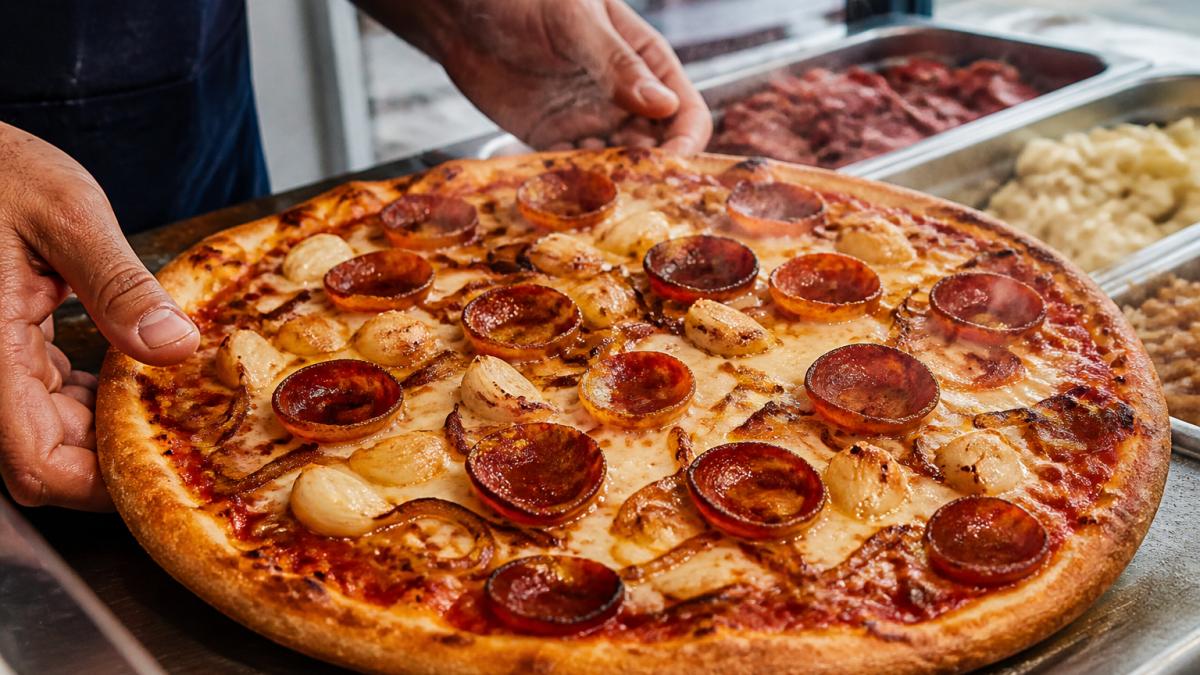
Toppings to approach carefully: anchovies and olives work, but their saltiness stands out sharply against the rounded flavor, order them on the side or request a light hand.
Keep the topping count moderate. Sweet sauce pizza benefits from simplicity. Three to four toppings maximum lets each flavor register. Too many toppings muddy the sauce's character, which is the whole point of ordering this style.
How to Order Sweet Sauce Pizza Your First Time
A first order of sweet sauce pizza goes better with a short, specific script than a vague request. Here's a practical protocol.
1. Confirm the sauce exists, and what kind it is. Not every pizzeria offers sweet sauce, and those that do mean different things by it.
**2.
3. Request normal application, not light. Sweet sauce is designed to coat the pizza; a light application leaves you tasting mostly cheese and crust.
4. Match toppings to the sauce. Pepperoni and sausage are the safest starting points because their salt and spice counterbalance the sweetness.
5. Consider a spicy condiment. A common pattern among first-timers is to add crushed red pepper, chili flakes, or a hot honey drizzle on the side.
6. Start with a small or medium. This limits your commitment if the flavor doesn't appeal, and it's easier to share with someone skeptical about the concept.
7. Eat it fresh and hot. Sweet sauce pizza tastes best within 15-20 minutes of leaving the oven, when the sauce flavor is most pronounced and the crust retains its texture.
**8.
A final practical note: if you're ordering for a group, order one sweet-sauce pie alongside a traditional one. The side-by-side comparison is the fastest way to learn your own preference, and it answers the "is it worth trying" question for everyone at the table at once.
Regional Style and Local Preference
Sweet sauce pizza isn't universal, it's regional. Certain areas have strong traditions of it, while other regions have never encountered it, which explains why some people are passionate about it and others have never tried it.
The style developed where Italian immigrants adapted traditional recipes to available ingredients and local tastes. What started as a regional preference became a cultural marker: people who grew up eating this pizza associate it with family meals and specific restaurants.
Pizza preferences vary dramatically by region. What tastes like "real pizza" in one area seems wrong in another, East Coast thin crust, Chicago deep dish, New York, Detroit. Sweet sauce pizza is another legitimate regional variation, not a departure from "correct" pizza.
That variation is part of what makes pizza interesting. Regional styles preserve culinary diversity and give communities their own food identity, and sweet sauce pizza is part of that landscape.
The Verdict: Is It Worth Your Order?
Sweet sauce pizza is worth trying if you approach it with genuine curiosity rather than skepticism. It isn't objectively better than traditional pizza, both styles are valid. The question is whether you're willing to experience a different flavor profile and decide for yourself.
Order it if you're tired of acidic tomato sauce or if you enjoy exploring regional food variations. Try it if you're in an area where it's a local tradition and you want to understand why people are enthusiastic about it.
The real test is your own palate.
Wana Pizza offers hand-tossed dough and signature sweet sauce that balances sweetness with tomato flavor. If you're in their service area and curious about this style, their pizza provides a straightforward way to experience what sweet sauce pizza actually tastes like.
The bottom line: sweet sauce pizza is worth trying once. It costs less to order a small pizza than to wonder forever whether you'd like it. Approach it with an open mind, order sensible toppings that complement the sauce, and eat it while it's hot.
Frequently Asked Questions
What does sweet pizza sauce taste like compared to regular sauce?
Sweet sauce pizza features a tomato base with added sweetness that balances the natural acidity of tomatoes. Unlike traditional pizza sauce, which is savory and tangy, sweet sauce pizza creates a more rounded, mellow flavor profile. Some people describe it as having caramelized notes. The sweetness doesn't overpower the dish, it's subtle enough to complement cheese and toppings rather than dominate them. If you enjoy balance between sweet and savory flavors, you'll likely appreciate this variation.
Is sweet sauce pizza worth trying if you usually prefer savory pizza?
Yes, it's worth trying at least once. Sweet sauce pizza isn't inherently better or worse than traditional pizza, it's simply another style or variation. Whether it appeals to you depends on your personal preference for sweetness and how much you want to balance tomato acidity. Many people who typically prefer savory flavors still enjoy sweet sauce pizza when paired with the right toppings and crust style. The best approach is to order it with toppings you know you like, so you're not taking a complete risk on an unfamiliar flavor profile.
What toppings pair best with sweet pizza sauce?
Sweet sauce pizza works well with both complementary and contrasting toppings. Cheese, pepperoni, and sausage are classic pairings that enhance the sauce's flavor. For contrast, spicy toppings like jalapeños or hot sauce create a sweet-and-spicy balance that many people enjoy. Fresh vegetables such as mushrooms, onions, and peppers also pair nicely. The key is choosing toppings that either echo the sauce's roundness or provide enough savory or spicy contrast to keep the overall flavor interesting. Avoid overly acidic toppings that might clash with the sweetness.
Can you customize a sweet sauce pizza to suit different preferences?
Yes. Most pizzerias allow you to customize your order with different crust styles, cheese amounts, and toppings. You can request sauce on the side if you want to control how much sweetness you get, or ask for a thin crust to let the sauce flavor shine through. If you're ordering for a group with mixed preferences, you can order one sweet sauce pizza and one traditional pizza to satisfy everyone. Customization options make it easy to experiment with sweet sauce pizza without committing to a full pie if you're uncertain about the flavor.
Sweet sauce pizza represents a legitimate flavor variation worth experiencing if you're open to regional food styles. Whether it becomes your new favorite or confirms your preference for traditional sauce, trying it settles the question personally. Wana Pizza's commitment to hand-tossed dough and signature sweet sauce makes it an accessible entry point for anyone curious about this style. Order now and discover whether sweet sauce pizza belongs in your regular rotation.