 blog
Unique Pizza Toppings to Try in 2026: 25 Bold Ideas
Table of Contents
- Why Unique Pizza Toppings Are Worth Trying in 2026
- Pizza Topping Trends 2026: What's Actually Showing Up on Menus
- Unique Pizza Topping Combinations That Actually Work
- Sweet and Savory Pizza Toppings: Where the Magic Happens
- Vegetarian Pizza Topping Ideas That Don't Feel Like a Compromise
- How to Layer Toppings So Your Crust Stays Crispy
- Dietary Swaps and Substitutions for Adventurous Toppings
- Conclusion: Picking Your Next Unique Pie
- Frequently Asked Questions
Last Updated: October 14, 2026
Why Unique Pizza Toppings Are Worth Trying in 2026
Ordering the same pepperoni pie every Friday gets old fast.
Pizza toppings are the ingredients placed on the dough before baking, ranging from classic meats and cheeses to fruit, sauces, and full meals.
Below, we break down 25 ideas across eight categories: what's trending, which combos work, and how to keep your crust crispy.
Pizza Topping Trends 2026: What's Actually Showing Up on Menus
Most topping lists are evergreen, the same pepperoni-and-pineapple debate recycled yearly. This is a snapshot of what's actually moving through kitchens and menus in 2026.
The through-line this year: regional and global flavors are pushing aside standard Italian classics. Instead of another margherita, people want heat, acid, and crunch borrowed from other traditions.
Global Flavor Swaps Replacing the Usual Italian Classics
Traditional choices still sell, but the growth is elsewhere. Consider these swaps:
- Gochujang and kimchi instead of tomato sauce and peppers
- Tandoori chicken with red onion and cilantro
- Barbacoa with pickled jalapeños and lime crema
Each keeps the pizza format but changes the flavor map. The pattern: a fermented or chili-based base for depth, a cool dairy or herb finish for contrast, and a crunchy raw garnish added after the bake.
The Return of Hearty, Comfort-Food Toppings
After a few years of light, veggie-forward pies, heavier toppings are back: mashed potato, macaroni and cheese, and breakfast pizza loaded with eggs and sausage. They're filling, affordable, and perfect for feeding a family without cooking two meals.
What's Fading in 2026
Trends move both directions. A few things that peaked earlier this decade are losing steam:
- Cauliflower crust as a novelty, still useful for gluten-free diners, but no longer a headline feature
- Charcoal-black dough, the visual gimmick has worn off; flavor didn't keep up
- Overloaded 'everything' pies, kitchens are pulling back toward three or four well-chosen toppings
If you're building at home, that last point matters: fewer, better toppings beat a crowded pie almost every time.
How to Read a Trend Before You Commit
A topping is 'trending' when it shows up across unrelated menus, not one viral post. Three signals:
- It appears in more than one cuisine. Gochujang showing up on Korean, Mexican, and American pies is a real signal; a single novelty pie is not.
- It survives a second year. Most fads vanish within a season. Anything still on menus a year later has legs.
- It works as a swap, not a stunt. The best 2026 trends replace a standard ingredient (sauce, cheese, meat) rather than getting piled on top of one.
Pairing Trends With What You Already Like
The safest way to try a 2026 trend is to anchor it to a flavor you trust. Love barbecue chicken? Gochujang chicken is a small jump, both are sweet-heat sauces over poultry. Love a margherita? Miso butter mushrooms are a gentle next step, since the umami does the same job as aged cheese.
Unique Pizza Topping Combinations That Actually Work
Some pairings sound strange until you taste them. The rule: balance fat with acid, and soft with crispy. Creamy cheese needs something sharp; sweet sauce needs something salty.
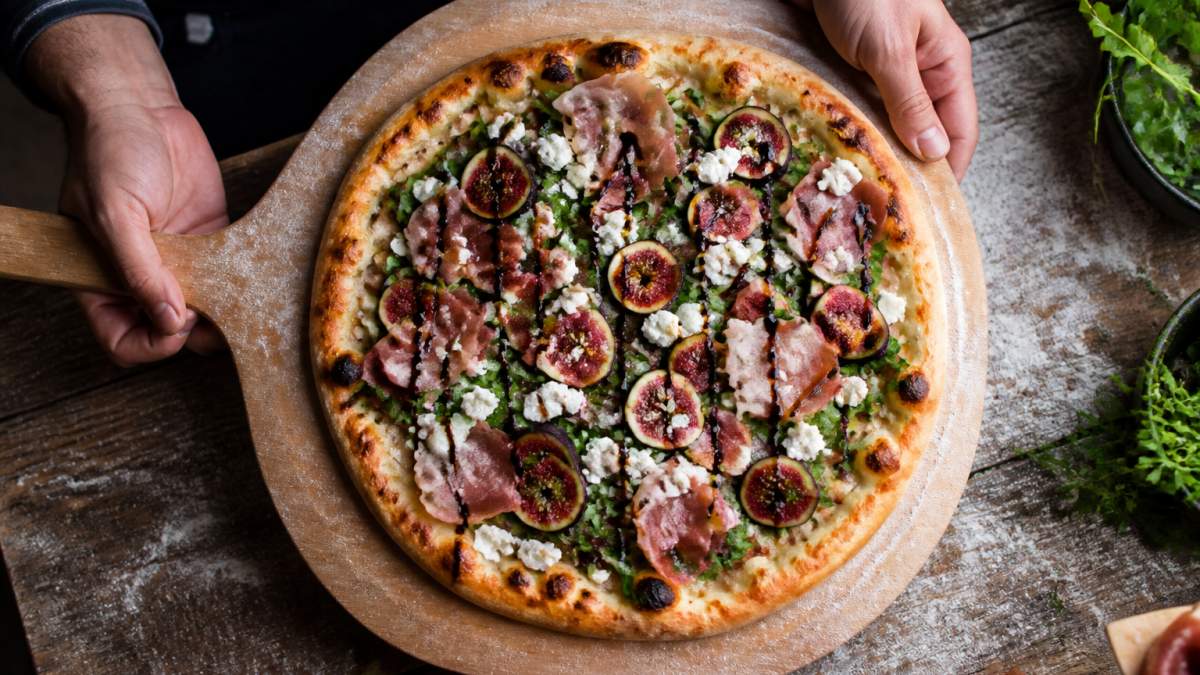
Here are combinations that work well.
Meat-Based Combinations Worth the Mess
Meat lovers have more room to play than they think:
- Pulled pork, barbecue sauce, and coleslaw added after baking
- Prosciutto, fig, and feta with a balsamic drizzle
- Meatballs, ricotta, and basil on a garlic butter base
The coleslaw trick matters. Adding cold, crunchy toppings after the bake keeps texture in the bite instead of turning everything to mush.
Cheese Combinations Beyond Mozzarella
Mozzarella is the default, not the only answer. A four-cheese blend of mozzarella, provolone, parmesan, and gorgonzola gives stretch, salt, and tang in one layer. For something lighter, try whipped ricotta with honey and cracked pepper.
Sweet and Savory Pizza Toppings: Where the Magic Happens
Sweet and savory pizza toppings work because contrast wakes up your palate: salt makes sweet taste sweeter, and acid cuts through fat. That's why pineapple and ham became a classic.
Fruit, Honey, and Balsamic Pairings
Fruit belongs on pizza more often than people admit. These combos hold up:
- Peach, prosciutto, and goat cheese
- Pear, gorgonzola, and walnut
- Fig jam, bacon, and arugula
Drizzle honey or balsamic after baking. Heat can turn a delicate glaze bitter.
Vegetarian Pizza Topping Ideas That Don't Feel Like a Compromise
Vegetarian pizza topping ideas fail when they rely on one sad vegetable. The fix is layering: a base, a protein stand-in, and a finishing crunch.
Vegetable Toppings That Hold Up in the Oven
Some vegetables turn watery under heat. Others get crispy and sweet. Choose wisely:
- Roasted cauliflower with tahini and pine nuts
- Caramelized onions with gruyère
- Roasted mushrooms with thyme and garlic
Pat fresh vegetables dry before they hit the dough. Moisture is the enemy of a crispy crust.
How to Layer Toppings So Your Crust Stays Crispy
Overloading a pizza is the most common mistake. Too many toppings trap steam, and steam makes soggy dough. The order you stack matters as much as what you stack, and so does how much you use. Here's the practical version.
The Layer Order, and Why It Works
| Layer | What Goes Here | Why It Matters |
|---|---|---|
| 1. Sauce | Thin, even coat | Too much sauce steams the dough |
| 2. Cheese | First layer, not last | Acts as a barrier against wet toppings |
| 3. Hearty items | Meat, roasted veg | Needs full bake time |
| 4. Delicate items | Herbs, greens, fruit | Added after baking |
| 5. Finishers | Honey, balsamic, cold crunch | Keeps texture and flavor bright |
The logic: wet ingredients go under the cheese so it can shield the crust, and anything that would burn, wilt, or lose crunch goes on after the bake.
How Much Is Too Much: Practical Quantities
A standard 12-inch pizza has roughly 113 square inches of surface, a lot until you start piling. As a working guide:
- Sauce: about 1/3 cup, spread to within half an inch of the edge
- Shredded cheese: 6 to 8 ounces total; if you're blending, keep mozzarella to about two-thirds of the mix
- Cooked meat: 3 to 4 ounces, roughly a small handful, not a full layer
A good rule of thumb: no more than three to four toppings total. If you want more, split them across two pizzas rather than crowding one.
Which Toppings Need Pre-Cooking, Draining, or a Late Add
This is where most home pies go wrong. Group toppings by how they behave in the oven:
- Pre-cook these: raw sausage, bacon, ground meat, mushrooms (they release a lot of water), and dense vegetables like potato or squash. Cook them most of the way through first.
- Drain or salt-and-rest these: fresh tomatoes, zucchini, eggplant, and fresh mozzarella. Slice, salt lightly, and let them sit on paper towels for 10 to 15 minutes, then blot. You'll be surprised how much liquid comes out.
- Add these after the bake: arugula, basil, cilantro, cold coleslaw, fresh fruit, prosciutto, and any drizzle or glaze. Heat turns delicate greens to mush and can make a honey or balsamic finish bitter.
Bake-Time and Temperature Considerations
Topping load changes how a pizza bakes, so adjust:
- A hot oven or stone (around 500°F) and a thin load is the classic setup, the crust sets fast and the toppings cook through in a few minutes.
- A heavier, wetter load needs either a slightly lower temperature for a bit longer, or a pre-baked crust so the dough isn't fighting all that moisture at once.
- A pre-baked crust is the reliable fix for gluten-free dough and for anyone stacking four or more toppings. Bake the crust partway, then top and finish.
A Quick Checklist Before the Oven
Run through this before the pie goes in:
- Sauce is thin and stops short of the edge.
- Cheese is the first layer over the sauce, not the last.
- Any wet vegetable has been salted, rested, and blotted.
- Any raw meat has been cooked most of the way through.
- Delicate greens, cold crunch, and drizzles are set aside for after the bake.
- Total toppings are three to four, not six.
Do those six things and you'll get a crisp base even with an adventurous topping list, the whole point of trying something new without ruining dinner.
Dietary Swaps and Substitutions for Adventurous Toppings
You can chase bold flavors without abandoning dietary needs. Most swaps are simple once you know what each ingredient does.
- Gluten-free crust: works fine, but pre-bake it a few minutes before topping
- Dairy-free cheese: choose one that melts, not one that just softens
- Meat substitutes: crumbled plant-based sausage holds shape better than shredded versions
Ordering for a group with mixed needs? Call ahead and ask what the kitchen can customize. A good shop will build one pie several ways rather than make you order three.
Conclusion: Picking Your Next Unique Pie
Choosing a new topping combo is a small risk with a big payoff. Start with one swap, taste it, then build from there. That's how most people find their new favorite.
When you'd rather leave it to the pros, Wana Pizza is ready. Our hand-tossed dough, signature sweet sauce, and garlic butter crust give you a base worth building on, and we'll customize the toppings to fit your crew.
Frequently Asked Questions
What are the pizza trends for 2026?
The biggest pizza topping trends 2026 center on global flavor swaps and comfort-food mashups. Expect to see more toppings borrowed from other cuisines, like pulled pork, spicy chicken, and even macaroni and cheese. Sweet and savory combinations are also growing, with fig, pineapple, and honey showing up alongside prosciutto and feta.
What are some unique pizza topping ideas for vegetarians?
Vegetarian pizza topping ideas go far beyond mushrooms and onions. Try roasted cauliflower with garlic butter, spinach and feta, mashed potato with rosemary, or peas with ricotta. Other options include four-cheese blends. If you want something sweet and savory, add fig or pineapple with a balsamic drizzle. Many pizza places let you customize crust and toppings, so you can build a vegetarian pie that still feels indulgent.
What unusual toppings pair well with cheese pizza?
Cheese pizza is a blank canvas for unusual toppings. Prosciutto and fig add a sweet-salty contrast. For something vegetarian, try cauliflower, peas, or mashed potato. The key is balancing moisture: pat wet toppings dry before baking so the crust stays crispy instead of soggy.
How do you keep unusual pizza toppings from making the crust soggy?
Start by pre-baking or par-baking your crust for a few minutes before adding toppings. Pat wet ingredients like pineapple, tomatoes, or fresh mozzarella dry with paper towels. Layer cheese first as a moisture barrier, then add heavier or wetter toppings on top. Avoid overloading; a thin, even layer bakes better than a piled-high pie. If you are ordering delivery, choose a place known for hand-tossed dough that holds up well.
The best pie is the one you haven't tried yet. Whether you go sweet and savory or load up on roasted vegetables, the right base makes every topping taste better. Wana Pizza brings hand-tossed dough, signature sweet sauce, and a garlic butter crust to every order, plus fresh ingredients and crust options that work for the whole family. Get started with Wana Pizza and build the pie you've been craving.